Skip to content
Viz Tools - Latest Trends in Software, Tech, and Innovation

Viz Tools - Latest Trends in Software, Tech, and Innovation

  • Home
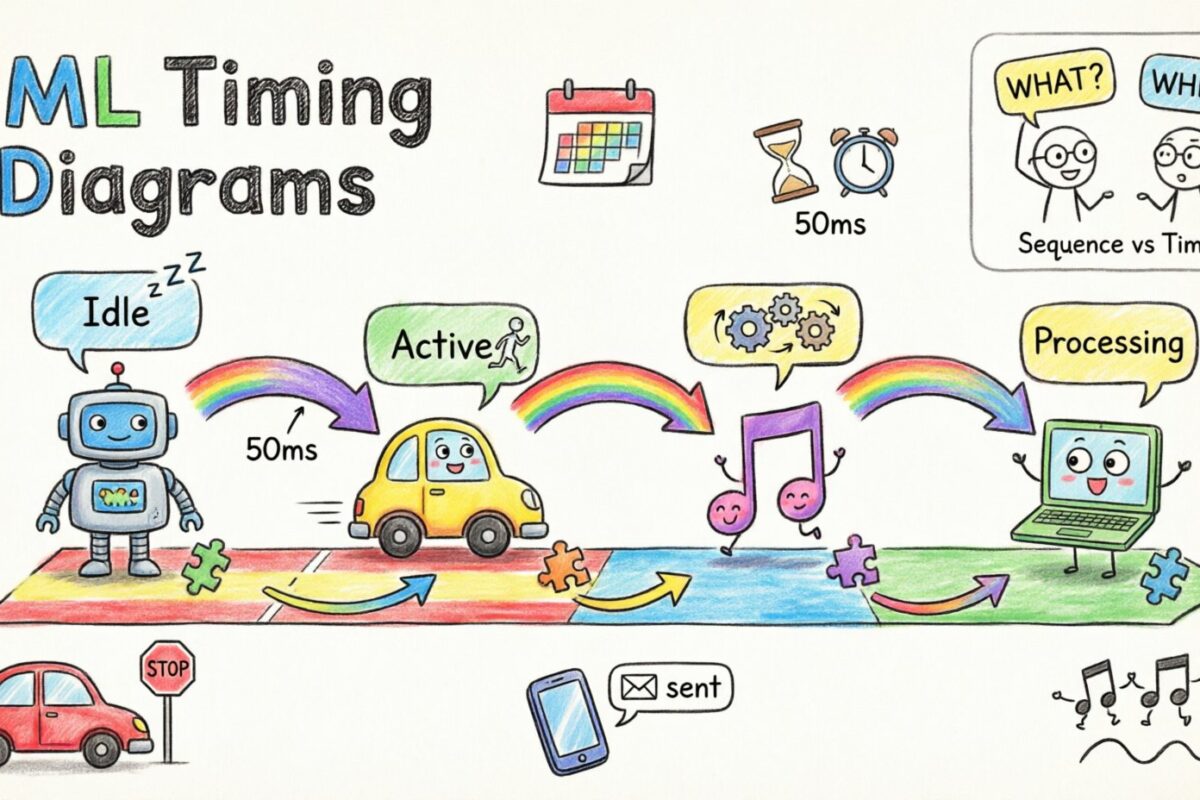
UML Timing Diagram Myth-Buster: Why “Time” in Diagrams Isn’t Just a Vertical Axis
Posted inUnified Modeling Language

UML Timing Diagram Myth-Buster: Why “Time” in Diagrams Isn’t Just a Vertical Axis

Modeling complex systems requires precision. When engineers and architects attempt to visualize the behavior of software or hardware over a duration, they often turn to Unified Modeling Language (UML) diagrams.…
Definitive Overview of UML Timing Diagrams: A Comprehensive Walkthrough for Real-Time Developers
Posted inUnified Modeling Language

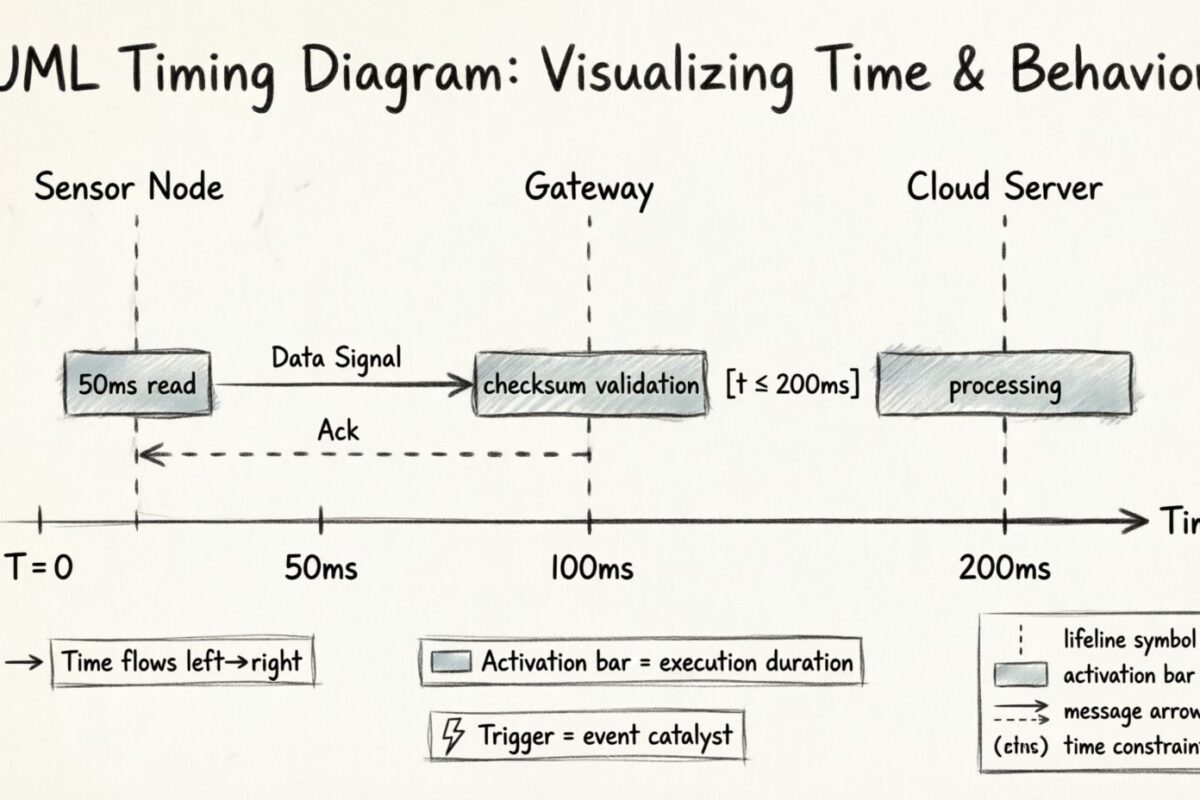
Definitive Overview of UML Timing Diagrams: A Comprehensive Walkthrough for Real-Time Developers

Understanding temporal behavior is critical when designing systems where milliseconds matter. In the domain of embedded engineering and concurrent processing, a static representation of object interaction often fails to capture…
From Chaos to Clarity: Refactoring Legacy Code with UML Activity Diagrams
Posted inUnified Modeling Language

From Chaos to Clarity: Refactoring Legacy Code with UML Activity Diagrams

Every software system carries a history. 📜 Over years, requirements shift, features accumulate, and patches pile on. The result is often a codebase that works but feels like a puzzle…
When to Skip UML Activity Diagrams: Knowing When They Don’t Add Value
Posted inUnified Modeling Language

When to Skip UML Activity Diagrams: Knowing When They Don’t Add Value

In the landscape of system design and software engineering, few artifacts are as ubiquitous as the Unified Modeling Language (UML) activity diagram. These flowcharts provide a visual representation of the…
Beyond the Basics: Advanced Patterns in UML Activity Diagrams for Mid-Level Devs
Posted inUnified Modeling Language

Beyond the Basics: Advanced Patterns in UML Activity Diagrams for Mid-Level Devs

For many developers, the UML activity diagram begins and ends with a simple flowchart. You draw a start node, connect a few actions, and finish with an end node. While…
Breaking Down UML Activity Diagrams: Swimlanes, Forks, and Joins Explained
Posted inUnified Modeling Language

Breaking Down UML Activity Diagrams: Swimlanes, Forks, and Joins Explained

Unified Modeling Language (UML) Activity Diagrams are essential artifacts for visualizing the workflow of a system. They provide a clear picture of how data and control move through a process,…
UML Timing Diagram Checklist: 10 Essential Elements Every Mid-Level Developer Must Include
Posted inUnified Modeling Language

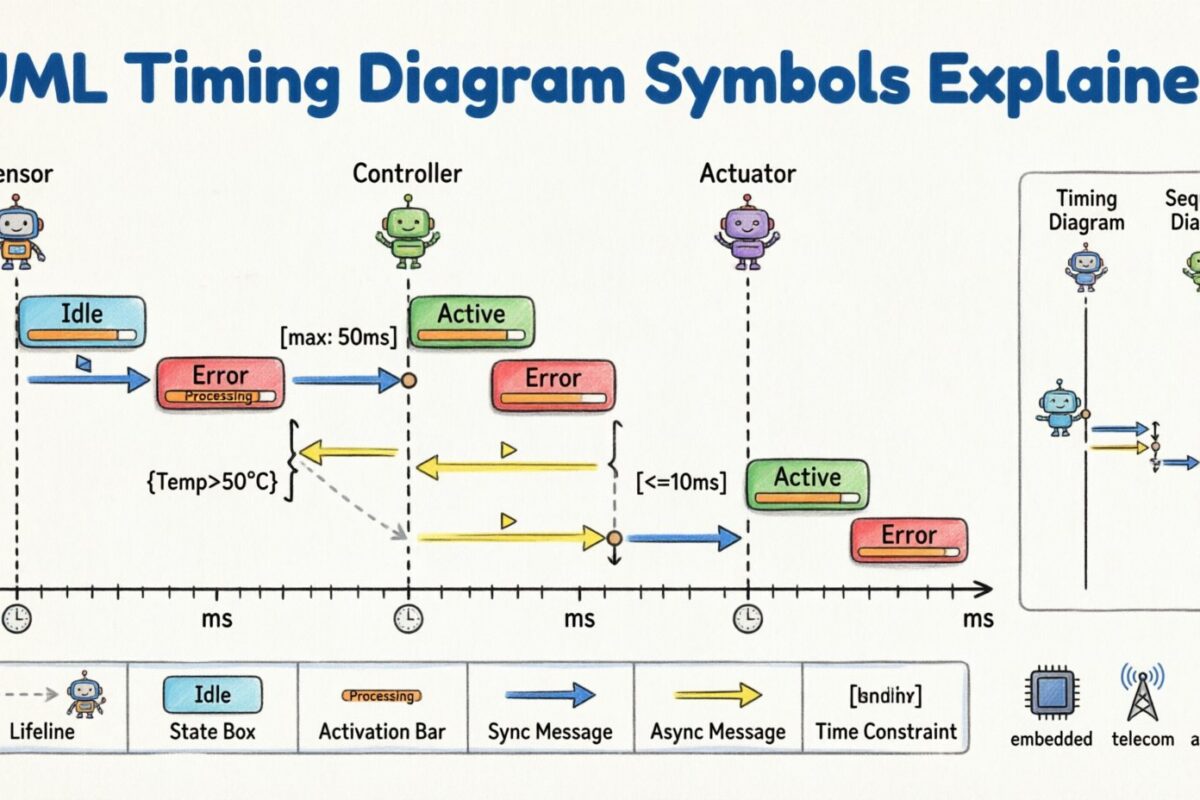
UML Timing Diagram Checklist: 10 Essential Elements Every Mid-Level Developer Must Include

Modeling concurrent systems requires precision. When a developer moves beyond simple linear execution flows, the complexity of time becomes the primary variable. The Unified Modeling Language (UML) provides a specific…
Troubleshooting UML Timing Diagrams: What to Do When Your System Behavior Doesn’t Match the Model
Posted inUnified Modeling Language

Troubleshooting UML Timing Diagrams: What to Do When Your System Behavior Doesn’t Match the Model

When the gap between a design model and actual system execution widens, engineering teams face critical challenges. This is particularly true for UML Timing Diagrams, which serve as the blueprint…
UML Timing Diagram Quick Start: How to Model Message Delays and Processing Times Fast
Posted inUnified Modeling Language

UML Timing Diagram Quick Start: How to Model Message Delays and Processing Times Fast

In complex software architectures, understanding when things happen is just as critical as knowing what happens. While sequence diagrams map interactions, they often lack the precision required to analyze temporal…
Why Your UML Activity Diagrams Look Messy and How to Fix Them
Posted inUnified Modeling Language

Why Your UML Activity Diagrams Look Messy and How to Fix Them

Creating clear, effective UML activity diagrams is a critical skill for any analyst or developer. Yet, many professionals struggle with diagrams that appear cluttered, confusing, or outright unreadable. When stakeholders…

Posts pagination

1 2 3 … 23 Next page
Language
de_DEes_ESfr_FRhi_INid_IDjapl_PLpt_PTru_RUvizh_CNzh_TW
Categories
  • AI
  • AI Chatbot
  • AI Image Translator
  • AI Visual Modeling
  • Animation Tool
  • ArchiMate
  • C4 Model
  • Cloud Architecture Diagram
  • Content & Visual
  • Database Design
  • Enterprise Architecture
  • Flipbook Maker
  • Project Management
  • Scrum
  • Software Development
  • Strategic Analysis
  • SysML
  • TOGAF
  • Uncategorized
  • Unified Modeling Language

Recent Posts

  • UML Timing Diagram Myth-Buster: Why “Time” in Diagrams Isn’t Just a Vertical Axis
  • Definitive Overview of UML Timing Diagrams: A Comprehensive Walkthrough for Real-Time Developers
  • From Chaos to Clarity: Refactoring Legacy Code with UML Activity Diagrams
  • When to Skip UML Activity Diagrams: Knowing When They Don’t Add Value
  • Beyond the Basics: Advanced Patterns in UML Activity Diagrams for Mid-Level Devs
You May Have Missed
UML Timing Diagram Myth-Buster: Why “Time” in Diagrams Isn’t Just a Vertical Axis
Posted inUnified Modeling Language

UML Timing Diagram Myth-Buster: Why “Time” in Diagrams Isn’t Just a Vertical Axis

Definitive Overview of UML Timing Diagrams: A Comprehensive Walkthrough for Real-Time Developers
Posted inUnified Modeling Language

Definitive Overview of UML Timing Diagrams: A Comprehensive Walkthrough for Real-Time Developers

From Chaos to Clarity: Refactoring Legacy Code with UML Activity Diagrams
Posted inUnified Modeling Language

From Chaos to Clarity: Refactoring Legacy Code with UML Activity Diagrams

When to Skip UML Activity Diagrams: Knowing When They Don’t Add Value
Posted inUnified Modeling Language

When to Skip UML Activity Diagrams: Knowing When They Don’t Add Value

Copyright 2026 — Viz Tools - Latest Trends in Software, Tech, and Innovation. All rights reserved.
Scroll to Top